Sizilien von seinen schoensten Seiten erleben und das zu jeder Jahreszeit

Willkommen in Terrasini Ferienwohnung Casa Ullaegino
Sizilien von seinen schoensten Seiten erleben und das zu jeder Jahreszeit


Goethe once said 'Having visited Italy without seeing Sicily is like not having seen Italy at all, for Sicily is the key to everything'
| Sicily is an island full of strong contrasts, a land rich in history and culture, lively, enticing cities of art, ancient fishermen’s villages where time seems to have come to a standstill and amazing natural wonders, beautiful beaches and islands where you can relax surrounded by crystal clear waters. The island is a crossroads for populations who were completely different from one another, who have all left permanent traces of themselves in the island’s culture ....more.........> |
 a photo trip on the Island of Sicily, discover and enjoy Sicily on many 1000's pictures from the biggest and beautifull Island in the Mediteranean Sea
 TERRASINI (PALERMO) — Babbo Natale come non l’avete mai visto. In mutande. Da qualche giorno una sua versione in polistirolo, alta tre metri, ha preso possesso della piazza Duomo di Terrasini, Comune a 30 chilometri da Palermo. Santa Clause indossa un paio di slip giganteschi e se ne sta affossato in una sedia a sdraio a prendere il sole. Il sindaco Mimmo Consiglio (Pd) cercava «un’idea originale» in grado di richiamare la vocazione balneare del suo Comune.
Sicuramente quel Babbo Natale è parecchio eccentrico. E le sue cosce, al pari delle componenti anatomiche che stanno in mezzo, sono puntate contro la chiesa Madre, il duomo della città. Un affronto, a parere di alcuni cittadini che, dopo i primi mugugni e le prime lamentele, hanno deciso di riversare il loro disappunto in una petizione da spedire al sindaco per invitarlo a rimuovere la scultura. L’arciprete Raffaele Speciale, tra i firmatari dell´appello, premette che non vuole fare polemica, aggiunge che non ha intenzione di entrare nel merito della scelta artistica, ma sull’o pportunità di installare l’opera ha qualcosa di diverso da dire: «Questo Babbo Natale è fuori luogo per l’abbigliamento che indossa e per la posizione.
Non è un bel messaggio per i bambini». Ma proprio i più piccoli, secondo il sindaco Consiglio, «hanno manifestato grande entusiasmo per questo Santa Clause così diverso da tutti gli altri». D’altra parte, aggiunge il primo cittadino, «volevamo ricordare con ironia che Terrasini è una città balneare. Le critiche le accetto, ma l’opera resterà dov’è fino a conclusione del periodo festivo». Il Babbo Natale in versione «tipo da spiaggia», costato seimila euro, è stato commissionato allo scenografo Cesare Inzerillo, che lo ha realizzato assieme a Marilena Manzella, Sergio Chiovaro e Nicola Sferruzza. «Abbiamo pensato a un Santa Clause che almeno a Terrasini potesse riposarsi — racconta Inzerillo — ma volevamo soprattutto far vedere la carne di Babbo Natale, dimostrare che è umano come tutti noi».
Certo però — è l’osservazione mossa dai mugugnanti — potevano risparmiarsi di lasciarlo in mutande. E invece, secondo Inzerillo, quella è una caratteristica sostanziale dell´opera: «Babbo Natale — conclude lo scenografo che ha lavorato con Ciprì & Maresco — è in mutande anche per la crisi economica internazionale. Mi hanno chiesto di correggere l’opera, di mettergli un paio di pantaloncini: non se ne parla nemmeno. Babbo Natale resta in mutande».
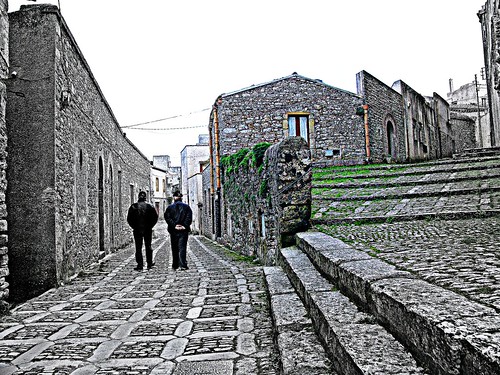

 "Money talks", sagt die amerikanische Touristin mit augenzwinkerndem Insidergrinsen. Und macht pragmatisch aus Palermo und der Mafia eine simple Gleichung mit zwei guten Bekannten. Der Führer, der uns durch den Palazzo Mirto des Fürsten Lanza aus dem 18. Jahrhundert führt, zieht kaum merklich den Kopf ein. Als fürchte er, dass es gleich Putz und Stuck regne.
Gerade hat er uns erzählt, dass der Fürst seinen Titel vom Bourbonenkönig gekauft hat, als Sizilien neben Neapel zum "Königreich beider Sizilien" gehörte. Und dass der geräumige Stadtpalast, in dem Luchino Visconti ohne Platzangst seinen großen sizilianischen Endzeitfilm "Der Leopard" hätte unterbringen können, enorm kostspielig in Unterhaltung und modischer Anpassung gewesen sei; man sehe sich nur das Chinesische Zimmer an. Und dass in Palermo weitere Adelssitze, in denen früher filmreife Sommerbälle stattfanden, pittoresk vor sich hingammeln - manche schon, seit Garibaldi 1860 mit dem feudalen Italien aufräumte und die sizilianischen Adeligen ihre Ländereien in der Obhut ihrer Verwalter zurückließen. Dass überhaupt ganz Palermo von skandalösem Siechtum befallen sei. Weil gutes europäisches Geld für die Stadtruine meist zweckentfremdet auf mafiösen Konten landete. Trotzdem stimmt der Spruch der Amerikanerin nicht ganz.
Futtermeile Piazza Marina
Geld spricht in Palermo nämlich nicht, es versickert lautlos und es wird schweigend entrichtet von allen, die ihren Läden in Palermo einen störungsfreien Geschäftsalltag gönnen wollen. Deutet der Führer an, der dann aber nichts mehr sagen mag über jene mörderischen Schutzengel, die Palermo lange zu einer Art Vorhölle gemacht hatten.
Vor der mit Seidentapeten ausgeschlagenen fürstlichen Mottenkiste Palazzo Mirto pulsiert das Leben so, dass man annehmen darf, die siechende Stadt am Mare Tirreno habe sich vom Krankenlager davongestohlen, um nun draußen mit bester Gesundheit zu prahlen.
Ein Beispiel aktueller Selbstheilung liegt gleich um die Ecke. Die Piazza Marina war eine von bröckelnden Fassaden umgebene Müllgrube, bewacht von grotesk ausladenden Würgefeigenästen. Eine Art zu allem entschlossene Bürgerwehr, die Müll und Tod in der Stadt satt hatte, rückte dem Stilleben zu Leibe und schaufelte daraus einen alten Park mit breitem Restaurantsaum, worum sich nun vor allem am Wochenende gestikulierende M enschentrauben scharen, die mehr oder weniger ungeduldig auf freie Tische warten. Klingelndes Besteck auf Porzellan ist allemal ein gesunder Sound.
Herrliches Chaos
Gasseneinwärts riecht es nach Wäsche, Staub und Knoblauch, wobei letztere Gerüche mit Sisyphus-Anstrengung immer wieder aus den Klamotten herausgewaschen werden, nur damit sie jene bereits während des Trocknens wieder aus der gesättigten Luft saugen.
Die Gassen hängen zwischen Stockwerk eins und fünf voll von dieser anrührenden Beflaggung. Wer das unschuldig fotografieren will, kann schon mal von einem jugendlichen Vespa-Ritter zur Rede gestellt werden, weil man gerade auf sein Bettlaken fokussiert. Für uns schiebt sich zur Rettung ein Trauben-und-Tomaten-Händler ins Bild, der einer Frau zwischen flatternden Handtüchern im Vierten eine  Korbladung Rohkost fertig packt, die dann als schwankende Vitaminbombe am Seil nach oben ruckelt. Nebendran wird gerade die Straße aufgerissen, beobachtet von der allgegenwärtigen Madonna, die aus ihrem Schrein gütig dem Treiben zuschaut. Noch eine Ecke weiter prangt eine Kreuzwegstation aus Verkehrsschildern, deren Gebote und Pfeile sich herrlich ad absurdum führen. Europäische Verkehrsregeln und Ampeln gibt's noch nicht so lange in Palermo und in den Seitenstraßen wirkt das manchmal wie ein poetischer Schilderstreich von Vorschriften-Anarchos.
Zwei links, zwei rechts, dieses Schlendermuster im rumorenden Gassenverlies Palermos funktioniert ganz wunderbar. Irgendwann weitet sich die familiäre Enge immer wieder zu einem Platz mit Geschichte, Schönheit und berühmten sizilianischen Eiscafés, meist unerwartet und in perfektes Licht getaucht.
Mekka für Kunsthistoriker
Zwischen Via Roma und Via Maqueda stolpern wir hinein in ein Stelldichein klassischer Marmorschönheiten aus Mensch- und Tierreich. Die enorme Fontana Pretoria aus dem 16. Jahrhundert wurde anfangs hin- und hergeschoben, weil sie dem König zu groß, der Bevölkerung zu erotisch war.
Goethe empfand den opulenten Brunnen als "Raserei". Jetzt sprengt dieser die Dimension des Rathausplatzes, eingebettet in Fassadenrenovierungsarbeiten, direkt gegenüber vom Studentenviertel mit seinen Bars und Restaurants.
Auch nebenan, auf der Piazza Bellini, müssen sich harmoniesüchtige Blicke an bauliche Stilblüten und den eigenwillig en Niederschlag der bewegten Vergangenheit Palermos in sakraler Architektur gewöhnen. Die Kirche La Martorana wurde 1143 von Georg von Antiochia, einem Großadmiral der normannischen Eroberer Siziliens, gestiftet. Der gehörte als orthodoxer Christ zwar zu den siegreichen Kreuzrittern der Normannen, hatte sich aber die Sprache der vertriebenen Araber angeeignet. Diese hatten fast 200 Jahre lang Sizilien von Palermo aus regiert.
Folglich sind arabische Ornamentik, byzantinisch-orthodoxe Kreuzform und der später lateinisch veränderte Grundriss sowie die barocke Außengestaltung eingeflossen. Ein toller Tatort für detektivisch angehauchte Kunstgeschichte-Freaks.
Autor Martin Mueller
There's no downturn for Italy's four major crime organisations, and if shops and businesses in Naples or Palermo don't pay the 'pizzo', they'll feel the crunch, writes Paddy Agnew in Rome
A FEW YEARS ago, this correspondent paid a visit to the handsome and much visited Sicilian tourist resort of Taormina. Such was the mild, sunny weather on a Sicilian springtime day that we were able to eat a splendid meal, sitting out on the terrace of a little beach restaurant that nestled in a pretty cove just down the hill from Taormina.
Whilst we were paying for our meal, we complimented our waiter on both the food and the location, enquiring if he was the owner or part-owner of the restaurant. Surely, we reasoned, this is a thriving little business. Our interlocutor, a Sicilian, cut us short. He told us that not only was he not the proprietor of the establishment but also that he had no intention or desire to ever become the owner of this or any other Sicilian establishment.
"What would I do that for? You'd be working your ass off only to have the 'lads' [members of the Mafia] turn up every month looking for the 'pizzo' [protection money]. Why should I work for them?"
Our waiter in Taormina has a point. In its annual SOS Impresa report, The Hands Of Organised Crime On Business, Confesercenti, the Italian retailers' confederation, this week suggested that Mafia business is booming. Between them, Italy's four major crime organisations - the Mafia in Sicily, the 'Ndrangheta in Calabria, the Camorra in Campania and the Sacra Corona Unita in Puglia - have a combined turnover of €130 billion, whilst their annual "profits" for the year 2007 were approximately €70 billion. Put it another way, organised crime is Italy's number one business, weighing in at 6 per cent of Italian GDP.
In their report, Confesercenti even draw up a hypothetical annual statement from "Mafia Inc" in which they point out that organised crime's major earnings come from drug trafficking (€59bn), garbage and industrial waste disposal (€16bn), money lending (€12.5bn) and protection rackets (€9bn). On top of that, the arms trade, the trafficking of clandestine immigrants, prostitution rings, agriculture and, of course, public works contracts are all healthy earners for the "lads".
As a retailers' confederation, Confesercenti is obviously preoccupied with the flourishing racketeering business. They reckon that retailers in Italy pay out approximately €250 million daily by way of protection money. They point out too that paying the "pizzo" in cities such as Naples and Palermo simply becomes part of the culture, an everyday reality that comes complete with its own price list, as confirmed by a series of "pay registers" that have been seized over the years during anti-Mafia raids.
In other words, a normal shop in Palermo could be paying up to €500 per month protection, whilst a city-centre, upmarket shop could be paying upwards of €1,000. For a supermarket, the price is higher at €5,000 per month while a Palermo building site could be asked for as much as €10,000 per month.
Traditionally, organised crime uses protection money to look after the families of "lads" currently in prison, with a Mafia wife being paid up to €2,000 while her man serves time. One restaurant owner in Gela, Sicily, tells a revealing little tale. When he asked his "exactor" for a delay on the payment of that month's "pizzo" of €1,500, saying that business had been slow, he received a chilling reply: "What do you think, that all our guys in prison are dead?"
Whilst the request for protection money might be made in an understated way, it remains menacing and inexorable. The various mafia organisations have all got thousands of "lads" on the books and they have all got to be paid their monthly "mesata" (wage). Even here too, Confesercenti estimates salary levels which go from €25,000 for a hired killer to €40,000 per month for a family godfather. "Soldiers" on the ground, such as pushers and the guys who collect the "pizzo", earn up to €2,000 per month.
ORGANISED CRIME, of course, exists in a specific socio-economic context. Whilst the Italian unemployment level for 2007 was 6.1 per cent nationwide, that figure was doubled in the "mezzogiorno" (the south, including Calabria, Campania, Puglia and Sicily) where it registered 12.2 per cent. In parts of those four regions, too, unemployment is actually much higher, for example registering more than 40 per cent in certain zones of Naples. Not for nothing, then, organised crime flourishes in Italy's poorest regions.
In a recent article in the daily newspaper Il Riformista, magistrate and former lower house speaker Luciano Violante tells the story of a Neapolitan grandmother who went to visit her local godfather, taking him a handsome present and asking him to find her grandson a job: "There was a time when you went looking for a job for a boy to keep him out of harm's way. Today, you go looking for a job so that finally the boy will find himself in harm's way, on the only road which in that context can offer him both a role and survival," comments Violante.
If organised crime flourishes in (and indeed greatly contributes to) the relative poverty of certain regions, it has, of course, always relied on an alarming level of infiltration of the judiciary, the police forces, the media and, last but not least, the political class: "While I was on the run, I often met deputy Nicola Cosentino. He told us quite clearly that he was at our service for whatever . . . We had helped the deputy get elected and he was at our service for whatever we wanted to ask him. If we were to ask him for a certain contract, there was no way that he could refuse." The speaker is Dario De Simone, a member of the crime organisation the Camorra, who made the above accusations in a detailed statement to police on September 13th, 1996. In the 12 years since then, four other men, three members of the Camorra and one businessman, have confirmed these accusations, claiming that not only did Cosentino help the Camorra win various contracts in return for electoral support but also that he had carried messages from the imprisoned Camorra boss, Francesco "Sandokan" Schiavone, to his "soldiers" outside.
None of these accusations, however, seem to have done Cosentino much harm since his political star has, in the intervening years, risen and risen and he is now a junior minister at the Italian department of finance. Cosentino has been defended by prime minister Silvio Berlusconi and when his case came up in a parliamentary question last month, the minister for relations with parliament Elio Vito pointed a finger at those media sources (in particular weekly magazine L'Espresso) which had highlighted the case, saying that they had threatened "the credibility of state institutions". In the meantime, however, Neapolitan mafia investigators have opened an enquiry into Cosentino.
The point about Nicola Cosentino is that he comes from Casal di Principe, the little Campania town that is dominated by the Casalesi crime family, a family whose violent activities have received international attention thanks to author Roberto Saviano's bestseller, Gomorrah.
Now a film, Gomorrah won an award at the Cannes film festival last May, and it has been selected to represent Italy in the foreign language film category at next year's Academy Awards in Los Angeles.
Since writing his book, Saviano has lived under constant police protection because of fears that the Camorra would try to kill him. Media reports last month claimed that a supergrass had told his police contacts that the Camorra intended to kill Saviano by the end of this year, prompting an international show of solidarity for the Neapolitan writer led by public figures such as Nobel Prize winner Mikhail Gorbachev, writers Günter Grass and Ian McEwan and film directors Martin Scorsese and Spike Lee.
In the meantime, as it tries to reassert control, the Casalesi family is believed to be behind a campaign of terror and intimidation that resulted in the killing in September of six African immigrants in the Campania town of Castel Volturno. Investigators believe that the Africans, who may well have been small-time drug pushers, were killed because they had moved onto Casalesi "territory" without either "permission" or paying their dues.
It was partly as a memorial to those six immigrants and partly as an expression of solidarity with Roberto Saviano that legendary black South African singer Miriam Makeba agreed to sing at a concert in Castel Volturno last Sunday night. It was, sadly, to be her last concert because she died shortly after being taken ill on stage.
It would be nice to think that the concert and Miriam Makeba's insistence on singing there will change something. Nice but by no means guaranteed. Last Saturday, as workmen were putting up the stage on which Makeba was due to sing, "unknown persons" walked onto the concert site and arrogantly asked the workmen to pay the "pizzo". It may have been an anti-Mafia event, but the "lads" still wanted their cut. For the Mafia, business is business. Quelle; Irishtimes

The study, detailed in the Oct. 10 issue of the journal Science, could help geologists make better forecasts of volcanic eruptions.
Volcanic eruptions aren't just the lava, ash and other material that spews out of the volcano's mouth; they're also seismic events that shake the ground, just like an earthquake. And this shaking isn't the only seismic event that the eruption creates.
The other kind of seismicity associated with the volcano occurs after the initial shaking, but before the eruption, "when you have fluids and gases moving through the edifice and cracks and fault zones [and] you get this characteristic ringing and a resonance," said study team member Philip Benson of the University College London.
These so-called "low frequency events" are below the range of human hearing, but are detectable by instruments. Because they occur before the actual eruption, they could help predict when a volcano is about to blow.
Geologists have suspected that these low frequency events were created by the fluids interacting with damage zones in the rocks.
"But no one's actually seen these damage zones," Benson told LiveScience.
Scaling down
Benson and his colleagues set out to simulate these events and test theories with a scaled-down experiment in the lab using cylindrical rock cores drilled from Sicily's Mt. Etna.
The rock samples were placed in a chamber that was pressurized to simulate being buried at a depth of 1.5 miles (2.5 kilometers) underground. A piston is used to fracture the rock, to mimic a volcanic tremor.
"The first stage is to create a fault in the sample, and a damage zone," Benson explained. The next step is to decompress the sample.
"The pressure release stimulates rapid fluid movement," Benson said.
The fluid movement produced acoustic emissions just as it would in a real eruption, "but in the laboratory, because we're scaling down the whole process, the frequencies go up, and now it's above human hearing range," Benson explained. "But the physical mechanism responsible for these effects is the same."
Benson's team could then take samples of the rock cores, slice them up, and look at them in a microscope and "pick out the exact spot where these low frequency events occur," Benson said. The team was able to find the undulations and cracks that various theories predicted would be in the rock.
"So this is going to just simply improve our understanding of exactly how these processes occur," and will help volcano forecasters sharpen their forecasting models, Benson said.
Recreated By Andrea Thompson, Senior Writer
Volcano Quiz, Part 1
Natural Disasters: Top 10 U.S. Threats
Images: Wild Volcanoes
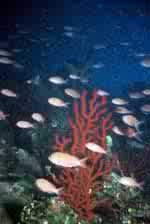
Giftige Skorpionfische, riesige Zackenbarsche, majestätische Wracks: Trotz seiner eindrucksvollen Unterwasserwelt ist Sizilien für Taucher bislang allenfalls ein Geheimtipp. Die schönste Schiffsruine liegt so tief, dass Anfänger am Strand bleiben müssen.
Nur müde spritzt die Gischt am Bug des acht Meter langen Bootes empor. Es ist ein heißer und windstiller Tag, das Mittelmeer liegt träge und glitzernd dar, als hätte es jemand mit Öl überzogen. Sechs Männer sitzen auf den Holzbänken im Schatten des Sonnensegels, ihre Tauchausrüstung fest mit der Reling verzurrt. >>>> weiter
eine sehr gute Tauchschule befindet sich hier vor Ort in Terrasini
Ferienwohnung in Terrasini
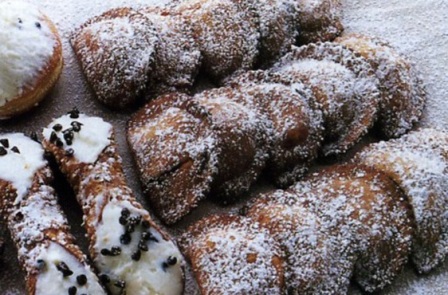
Work the flour, adding water until you get a solid dough. Take little portions of it and roll it out with a rolling-pin to obtain a thin round sheet about 12 cm across.
Roll these sheets of dough round a small cane cilinder, sealing the Joins well. In a rather large frying-pan, heat about 1 litre of oil, in which you will fry the sheets of dough until they are a nice golden colour; let them cool and remove the canes.
At this point prepare the creamed ricotta. Over a low flame melt 400 grams of sugar in a little water and add 1 Kilo of well sieved sheep-milk curd.
Stir all the time, letting it thicken and add aroma with vaniglia and the grated rind of a lemon or an orange. Take off the gas and when it is cold, add little pieces of chocolate and candid pumkin.
With this cream, fill up the pastry forms you have aeready prepared and decorate with thin alices of candid orange and icing-sugar.


